First, clearly define the target
“High purity” may refer to reducing ferromagnetic particles, or it may include weakly magnetic minerals, equipment wear debris, or other metals. Sampling, digestion, and analytical methods used by different laboratories can yield varying results. Therefore, before starting any project, the target impurities, current levels, target levels, sampling procedures, and acceptable product loss should be jointly confirmed.
Why is stable feeding important?
Roll-type dry magnetic separation requires that the material enter the magnetic roll zone in a relatively stable, thin, and uniformly distributed state. Excessive pile thickness, sudden surges of feed, or large variations in particle size can all alter the magnetic, gravitational, and inertial forces acting on the particles. Vibratory feeders, screening systems, and distribution mechanisms are often just as critical as the magnetic rolls themselves.
Assessable technical approaches
Roll-type dry magnetic separation
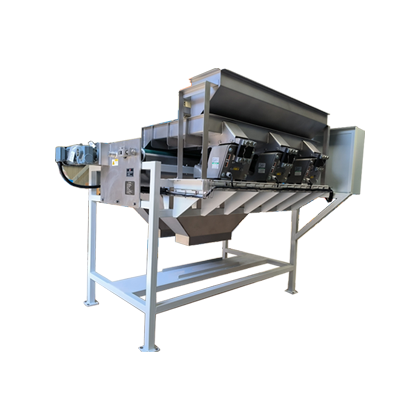
Suitable for powders or fine particles that can be dispersed and fed stably in a dry state. Discussions may cover magnetic roll diameter and width, belt type, belt speed, feed thickness, distribution point, and single- or multi-stage configurations. Specific separation results must be verified through tests using representative samples.
Electromagnetic dry powder high-gradient approach
For finer powders or weakly magnetic impurities, electromagnetic dry powder magnetic separators and appropriate magnetic media can be evaluated. Material throughput, media cleaning, cooling, operating cycles, and automated cleaning methods must all be considered simultaneously.
Multi-stage combinations
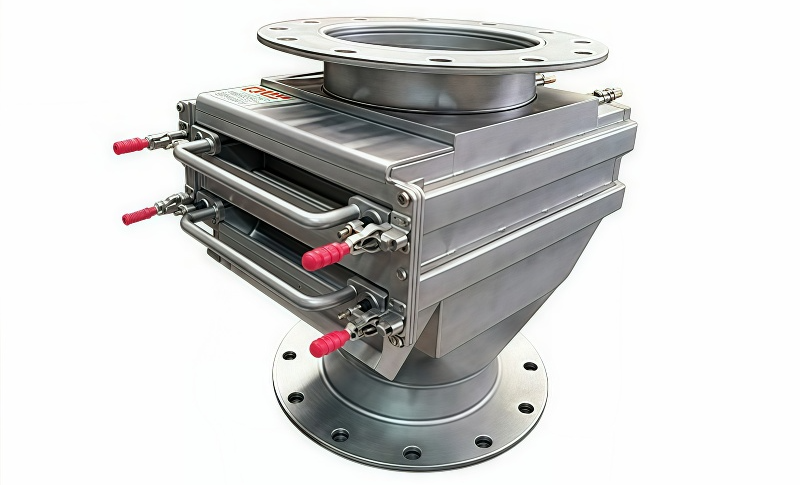
Front-end magnetic grates or drawer magnets can first remove visibly ferromagnetic contaminants; screening and stable feeding improve material condition; roll-type or electromagnetic equipment handles further separation; and final sampling and testing determine whether the mutually agreed-upon targets have been achieved.
Recommended verification process
- Select samples that represent both normal production conditions and the most challenging scenarios;
- Record particle size, moisture content, bulk density, temperature, and current impurity levels;
- Determine feeding parameters, magnetic separation stages, and distribution settings, retaining process samples;
- Analyze raw material, qualified product, and magnetic fractions using methods agreed upon by both parties;
- Simultaneously assess capacity, product loss, cleaning intervals, and operational complexity;
- Adjust equipment design and parameters based on the results, then finalize industrial-scale implementation.
Do not rely on a single figure for equipment selection
The gauss value at the equipment surface is only one characteristic of the magnetic circuit; it cannot independently confirm that a specific particle size will be captured, nor can it directly translate into the final ppm level. While our website showcases existing equipment and testing capabilities, project outcomes must be tied to sample materials, process conditions, and test records.
Please provide the following data
Material composition and safety data, particle size distribution, moisture content, temperature, bulk density, target impurities and detection methods, normal and peak throughput, allowable losses, existing process flow, and the quantity of samples that can be sent for testing.
Structural and principle diagrams
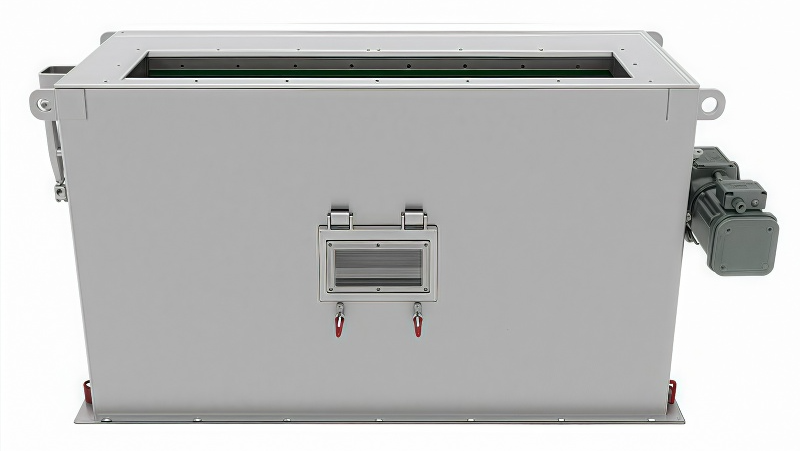
The following documents present our company’s existing equipment, internal structures, and operating principles, serving as reference to help understand possible configurations, combinations, and installation options. The final configuration, however, must still be confirmed in light of the material properties, flow rate, available space, and cleaning requirements.