The primary objective in high-viscosity applications is stable passage.
Colloids, pastes, coatings, inks, syrups, resin solutions, and high-solids slurries may exhibit wall adhesion, skin formation, settling, thixotropy, or viscosity increases upon temperature decline. In such cases, simply increasing the number of magnetic rods or narrowing the flow path, while enhancing the contact between the material and the magnetic field, can lead to elevated pressure drops, unstable flow rates, difficult cleaning, and even blockages.
Begin by distinguishing three categories of issues.
High viscosity but homogeneous material.
Start by reducing the flow velocity, enlarging the effective flow path, minimizing sharp bends, and optimizing the arrangement of the magnetic rods. If necessary, employ recirculation to achieve multiple contacts under gentler single-pass conditions, rather than forcing the material through an overly dense structure in a single pass.
Solid particles tend to settle.
Verify the tank agitator, pipeline low points, equipment bottom residues, and downtime. The location of the recirculation loop must ensure that a representative slurry sample is obtained; if sedimentation at the tank bottom is severe, merely returning the upper-layer liquid does not reflect the overall batch treatment results.
Flowability deteriorates significantly when the temperature drops.
Evaluate options such as water-jacket or media-jacket systems, insulated piping, and reduced residence time. The jacket medium, design pressure, temperature control, thermal expansion, and sealing materials should be confirmed separately, and the magnet’s temperature rating must also allow for sufficient margin.
Possible equipment configurations.
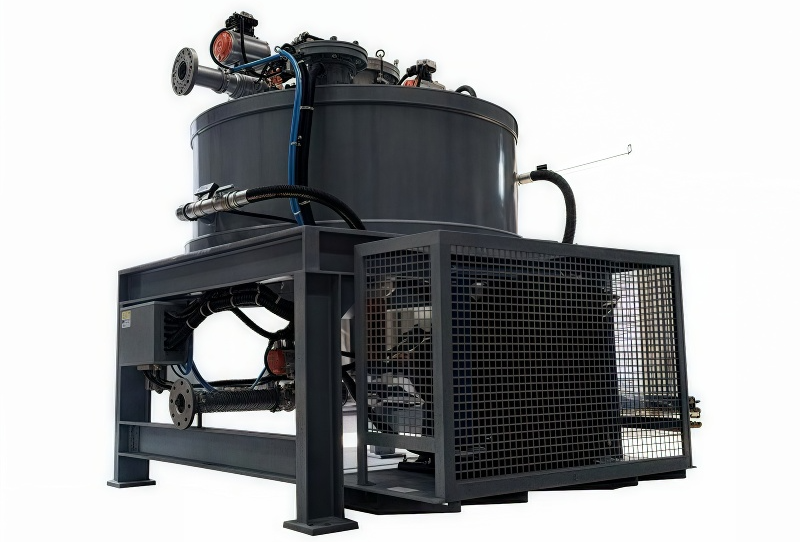
- Larger shell dimensions and a more open magnetic rod arrangement to reduce local flow resistance.
- Insulated or water-jacketed casing to maintain the material within a pumpable temperature range.
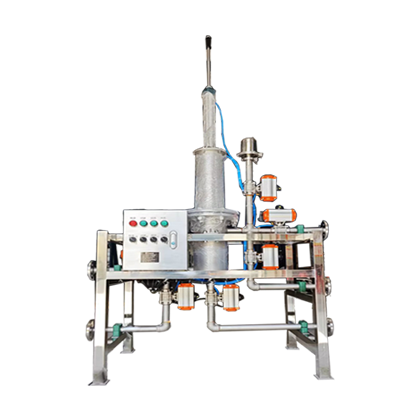
- Easy-to-clean sleeves, quick-opening structures, or automated extraction mechanisms to minimize adhesive residue cleanup time.
- Mobile recirculation carts to establish an independent processing loop outside the tank.
- Valve isolation, return flow, draining, and flushing ports to control residual buildup and solidification after shutdown.
Cleaning and batch changes are part of the design.
High-viscosity materials may be of significant value; during cleaning, it is essential to remove captured impurities while minimizing the loss of qualified product. It is necessary to determine in advance the material recovery pathway, the rinsing medium, the discharge location, whether blending batches is permitted, and the weight of disassembled components. When there is a risk of cross-contamination, assess the need for dedicated equipment, dedicated hoses, or a verifiable cleaning protocol.
Items requiring joint confirmation.
Please provide, if possible, viscosity data at different temperatures, solids content, maximum particle size, settling time, pump type, flow–pressure curves, allowable pressure drop, post-shutdown material behavior, and cleaning media. If complete data cannot be provided, initial small-flow tests or sample recirculation can be used to observe pressure drop, flow characteristics, and capture efficiency.
Structural and schematic diagrams.
The following materials present the company’s existing equipment, internal structures, and operating principles, serving as reference to understand the applicable configurations, combinations, and installation methods. The final configuration must still be confirmed in conjunction with the material properties, flow rate, available installation space, and cleaning requirements.