Application Scope
In plastic processing, virgin materials, color masterbatches, recycled materials, flake and pelletized scrap, and reprocessed particles may become contaminated with metal during unpacking, shredding, conveying, storage, blending, and equipment wear. The primary objectives typically include protecting shredders, extruders, and injection molding machines, reducing metallic foreign bodies in finished products, and enhancing the consistency of recycled materials.
Magnetic iron filings, screws, and steel components can be preferentially removed using magnetic separation; non-ferrous metals such as aluminum and copper cannot be directly captured by conventional permanent magnet devices and must be addressed through metal detection, eddy current separators, or other sorting methods. This page outlines only potential combinations for discussion and does not provide fixed separation results for untested materials.
Arrangement by Production Stage
- Before Shredding:Intercept larger metallic contaminants to reduce the risk of damage to blades, screens, and the shredder chamber.
- After Shredding and Screening:With material dilution and particle size stabilization, fine ferrous contaminants can be more effectively controlled.
- At Hopper and Blending Outlet:For the combined stream of virgin materials, recycled materials, and additives, identify suitable drop‑fall positions for ferrous contaminant removal.
- Before Extruder or Injection Molder:Prioritize equipment protection and final feed control while ensuring stable feeding and preventing bridging.
- Before Finished Recycled Product:Based on customer targets for ferromagnetic and non‑ferrous metals, as well as the desired purity of the final particles, multi‑stage combinations can be discussed.
Routes Corresponding to Different Material Forms
Regular Particles and Well‑Flowing Granules
Magnetic grates, drawer magnets, or bullet magnets can be considered first. These devices should be matched with hopper outlets, vacuum feed systems, or gravity chutes, and the presence of static electricity, dust, and surge flows must be assessed.
Flakes, Strips, and Irregularly Shredded Materials
Sheet‑like materials tend to interlock or bridge across magnetic rods, making plate magnets, drum magnets, or open‑air sorting after stabilized feeding more suitable. The specific choice depends on maximum dimensions, flexibility, moisture content, and bulk density.
Mixed Recycled Materials and Multiple Metals
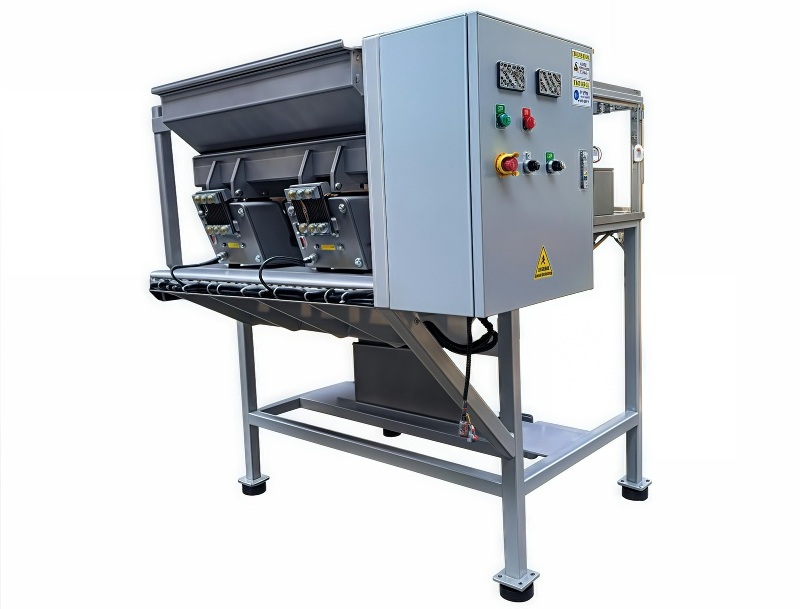
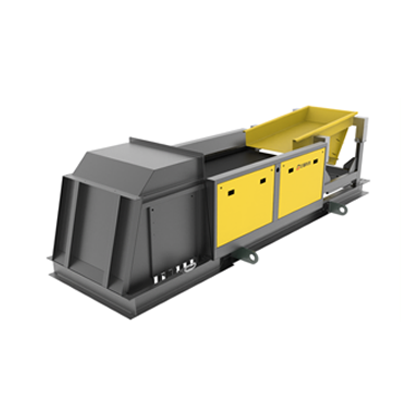
Vibratory feeders or conveyors can first create a relatively uniform single layer or thin spread, followed by ferrous metal control; if the goal also includes conductive non‑ferrous metals such as aluminum and copper, eddy current separation can be further evaluated. Particle sizes that are too small, overlapping material layers, high moisture content, or differing shapes of the target metals can all affect sorting performance.
Example Combination Scenarios
Equipment Protection Route:Pre‑shred interception of large ferrous objects → post‑shred magnetic separation → end‑of‑line control before extrusion or injection molding.
Recycled Material Quality Improvement Route:Screening and stabilized feeding → ferromagnetic metal separation → assessment of eddy current or metal detection based on particle size and target metals → separate collection of material fractions.
These represent engineering discussion sequences and do not constitute fixed configurations for any particular customer site. Actual systems must also account for dust collection, protective enclosures, conveyor belt materials, rotational speeds, diverters, control cabinets, and safety interlocks.
Variables to Be Confirmed
- Virgin materials, recycled materials, or mixed reclaimed materials, along with the proportion of each component.
- Minimum and maximum particle sizes, flake dimensions, bulk density, moisture content, and electrostatic conditions.
- Flow rate, feed width, whether uniform spreading is required, and continuous production needs.
- Types and sizes of target metals, including iron, steel, stainless steel, aluminum, and copper.
- Acceptable material loss, post‑separation collection methods, and available on‑site space.
Recommended Verification Approach
For mixed shredded materials, fine flakes, or projects requiring the separation of non‑ferrous metals, it is advisable to provide representative sample materials and target metal specimens, documenting the feed condition, particle size distribution, and expected output. Beisu can first assist in determining whether magnetic separation, metal detection, or eddy current sorting is appropriate, and then decide whether sample testing and system adjustments are necessary.
Structures and Principle Diagrams
The following materials present the company’s existing equipment, internal structures, and operating principles, serving as references to aid in understanding applicable configurations, combinations, and installation options. Final arrangements must still be confirmed in light of material characteristics, flow rates, installation space, and cleaning requirements.