The problem is often not just insufficient magnetic force.
Fatty, hygroscopic powders, those with irregular particle shapes, or powders exhibiting significant static electricity may form arches, accumulate material, or exhibit pulsed discharge at hopper outlets, between magnetic rod gaps, and at pipe bends. If the number of magnetic rod layers is increased as if treating free-flowing powders, theChannel may become even more congested, and cleaning will become increasingly difficult.
First, identify the on-site symptoms.
- The flow rate at the hopper outlet fluctuates, requiring tapping or manual intervention.
- Material accumulates between the magnetic rods and can only be thoroughly removed after a shutdown.
- After changes in material temperature, sticking or caking begins to occur.
- Following a change inFormula, the flowability changes noticeably.
- Dust containment requirements are stringent, making frequent door openings for extraction unsuitable.
Assessable technical approaches.
Rotary magnetic separator.
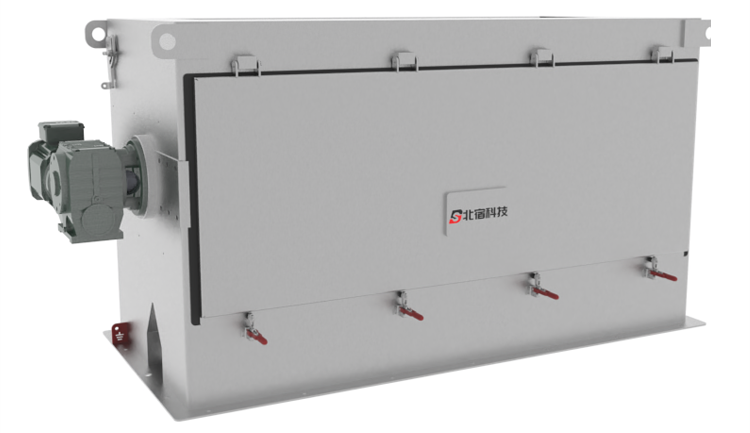
Rotating magnetic rods continuously agitate the material, reducing the likelihood of bridging above the magnetic components. The rotational speed, magnetic rod arrangement, channel dimensions, and drive method must be determined in conjunction with the material’s characteristics; a rotating structure does not guarantee that all materials will avoid blockages.
Stabilized feeding and arch-breaking.
Adding vibratory feeding, hopper vibration, or other arch-breaking methods upstream of the magnetic separator can reduceInstantaneous material surge andCut-off material. The feeding equipment is responsible for improving material flow, while the magnetic separation equipment captures impurities; the two should be selected separately and coordinated.
Automatic cleaning and sealed iron discharge.
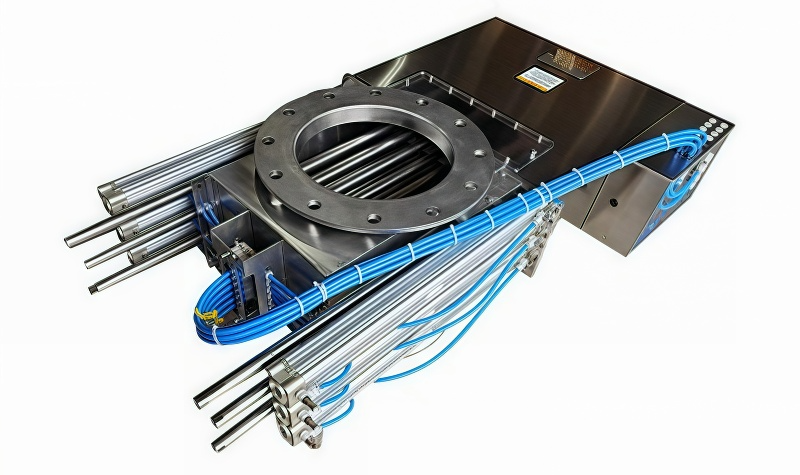
When equipment is difficult to access, manual cleaning disrupts production, or dust must not escape, automatic cleaning drawers orAutomatic rotation structures can be considered. It is necessary to simultaneously design isolation valves, iron discharge paths, iron collection containers, position feedback, and anomaly interlocks; simply adding cylinders is insufficient.
Hygiene, explosion protection, and cleaning.
For food and fine chemical projects, it is also essential to confirm areas prone to accumulation,Disassembly and Assembly, drainage, sealing, and contact materials. In explosive dust environments, the zone classification, dust category, temperature class, grounding, and on-site safety requirements must be verified; the use ofExplosion-proof components does not automatically render the entire machine suitable for all explosion-proof zones.
A possible combination.
Hopper arch-breaking → Adjustable vibratory feeder → Rotary magnetic separator → Downstream mixing or packaging.
If the customer needs to reduce manual cleaning, automatic iron discharge and PLC sequence control can be further evaluated. For materials with significant formulation variations, it is recommended to provide multiple representative samples forPassability andCleaning tests.
Key data to be confirmed jointly.
In addition to conventionalParticle size, density, andProduction capacity, please also provideAngle of Repose or flowability descriptions,Moisture content,Temperature, whether the material containsFats and oils, allowableVibration, availableAir source, continuous/batch production mode, as well as photos or videos of the currentBlockage location.
Structural and principle diagrams.
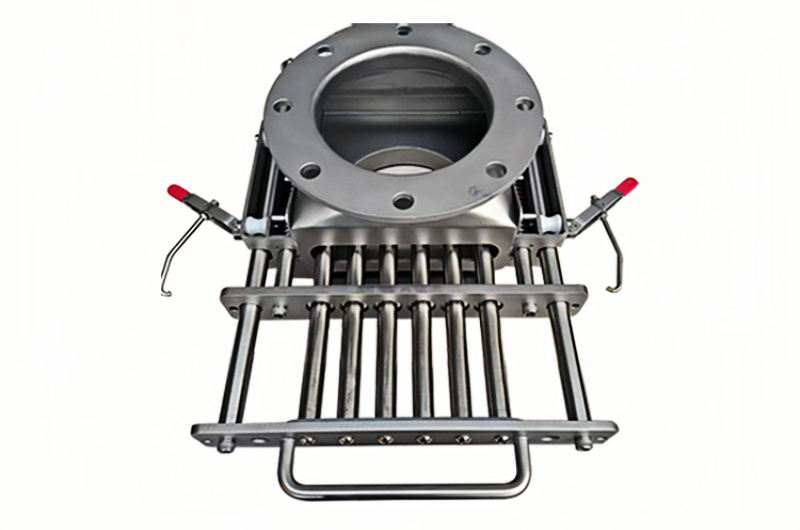
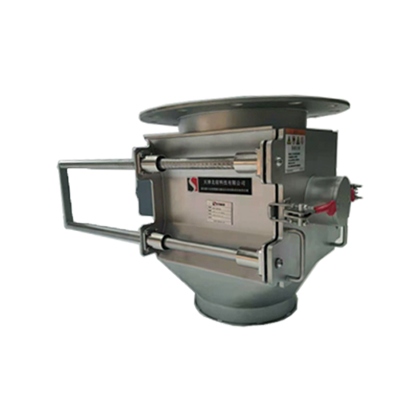
The following are the company’s existing equipment, internal structures, and working principleData, intended to aid in understanding theAvailable options structures,Combination, and installation forms. The final configuration must still be confirmed in light of the material,Flow rate,Installation space, andCleaning method.