Magnetic Rods
Self-Cleaning Rotary Magnetic Separator
OVERVIEW
Product Overview
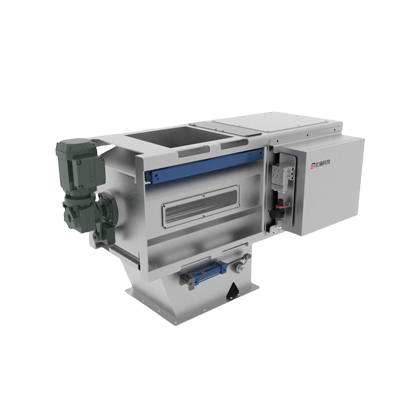
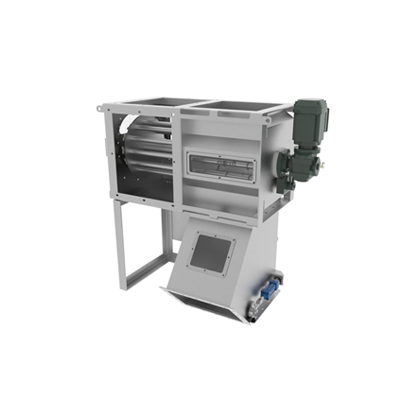
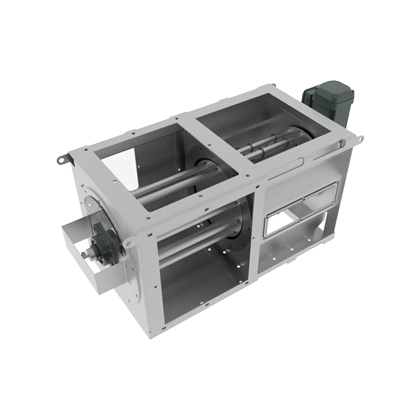
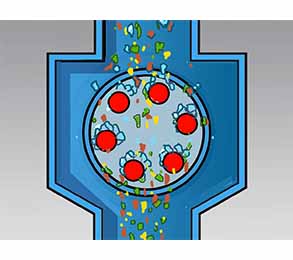
After the material enters the equipment, it passes through the internal rotating magnetic rod assembly under the force of gravity. Driven by a reduction motor, the magnetic rod group rotates continuously at a low speed. On one hand, the high-intensity magnetic field adsorbs ferrous contaminants such as iron filings, iron powder, and rust; on the other hand, the rotational motion breaks up agglomerated material structures, preventing bridging and blockage, thereby enhancing material flowability and improving the efficiency of ferrous contaminant removal. The adsorbed iron impurities adhere to the surface of the magnetic rods. The PLC control system automatically initiates the cleaning cycle at preset intervals, using either pneumatic separation or an automatic scraper mechanism to discharge the collected iron. Subsequently, the magnetic rods reset automatically and resume normal ferrous contaminant removal, ensuring continuous and stable operation.
Features and Advantages
- Anti-blocking and Anti-bridging: The rotating magnetic rods continuously agitate the material, effectively preventing powder accumulation, caking, and blockage, making them particularly suitable for materials with poor flowability or those prone to moisture absorption.
- Fully Automatic Cleaning: The PLC‑controlled intelligent system automates the processes of iron adsorption, discharge, and resetting, eliminating the need for frequent manual cleaning and reducing labor costs.
- High‑Strength Magnetic Iron Removal: Utilizing high‑performance NdFeB magnetic materials, the magnetic field strength can reach 12,000–14,000 GS, enabling efficient removal of fine iron powders and weakly magnetic impurities.
- Continuous and Stable Operation: Designed for continuous production, this system achieves non‑stop automatic iron discharge, ensuring uninterrupted line operation.
- Hygienic and Environmentally Friendly: Featuring a fully enclosed structure that minimizes dust emissions, with material‑contact parts constructed from 304 or 316L stainless steel.
- Easy Maintenance: A quick‑open design facilitates equipment inspection and maintenance, reducing downtime.
Optional Configurations
- Magnetic Field Strength Options: 8,000 GS, 10,000 GS, 12,000 GS, 14,000 GS.
- Cleaning Method Options: Pneumatic separation or automatic scraper type.
- Material Selection Options: SS304 stainless steel or SS316L stainless steel.
- Surface Finish Options: Mirror polishing, satin brushing, or PTFE anti‑stick coating.
- Control System Options: PLC automatic control, explosion‑proof electrical control, and human‑machine interface touch operation.
- Installation Method Options: Flanged connection or quick‑release clamp connection.
- Protection Rating Options: IP54 or IP65.
Applications
- New Energy Lithium‑Ion Battery Industry: Used for ferrous contaminant removal and purification of new energy powder materials; the rotating mechanism continuously disperses agglomerated particles, effectively removing fine iron impurities.
- Food Industry: Employed for online ferrous contaminant removal during the conveying and sieving of food powders, effectively preventing metallic contaminants from entering finished products.
- Pharmaceutical Industry: Suitable for ferrous contaminant removal in pharmaceutical powders, reducing the risk of metal foreign body contamination and complying with GMP clean production standards.
- Chemical Industry: Used for ferrous contaminant removal and purification of chemical powders, addressing issues of easy agglomeration and blockage.
- Plastics Industry: Applicable to ferrous contaminant removal in plastic powders and similar materials, protecting downstream extruders and injection molding equipment and minimizing the impact of metallic impurities on product quality.
- Ceramics and Mining Industry: Used for ferrous contaminant removal and purification of non‑metallic mineral powders, enhancing product whiteness, purity, and overall quality.
Materials Processed
- Food Powders: Wheat flour, milk powder, starch, powdered sugar, cocoa powder, seasonings, cereal flours.
- Pharmaceutical Powders: Medicinal powders, traditional Chinese medicine powders, active pharmaceutical ingredients, excipient powders, health supplement powders.
- New Energy Materials: Lithium iron phosphate, ternary materials, graphite powder, silicon‑carbon powder.
- Plastic Powders: PVC powder, PE powder, PP powder, PA powder, color masterbatch powder, recycled plastic powder.
- Chemical Powders: Pigment powders, dye powders, flame retardants, pesticide powders, detergent powders, catalyst powders.
- Ceramic Mineral Powders: Quartz powder, kaolin, ceramic powders, electronic ceramic powders, talc powder.
SPECIFICATIONS
Specifications
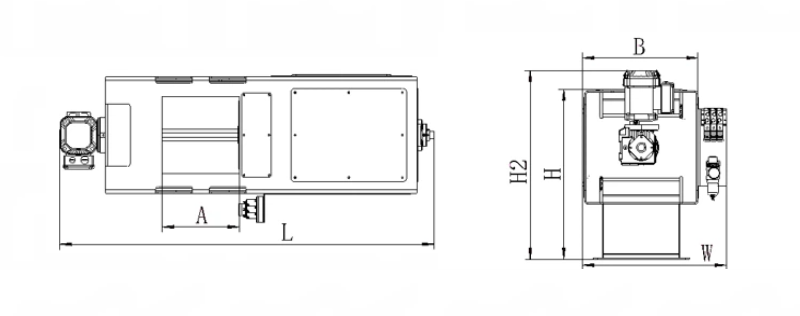
| Model Model | Dimension (mm) | Number of rods Number of magnetic rods | Overall height H2 | Overall length L | Overall width W | ||||
| Interface Specification Interface specifications | D | A | B | H | |||||
| GHR-1.4T-DN150 | DN150 | 800 | 159 | 310 | 505 | 7 | 630 | 1020 | 425 |
| GHR-1.4T-DN200 | DN200 | 945 | 219 | 359 | 555 | 8 | 655 | 1165 | 475 |
| GHR-1.4T-DN250 | DN250 | 1102 | 273 | 410 | 605 | 9 | 680 | 1320 | 525 |
| GHR-1.4T-DN300 | DN300 | 1200 | 325 | 465 | 655 | 11 | 705 | 1420 | 580 |
| GHR-1.4T-DN350 | DN350 | 1310 | 350 | 490 | 705 | 12 | 730 | 1530 | 605 |
DOWNLOADS
Downloads
DISCUSS YOUR APPLICATION
Unsure whether this product fits your material?
Share your material, capacity, temperature and contaminant details, and we will help you evaluate the next step.