Magnetic Rods
Self-Cleaning Drawer Magnet
OVERVIEW
Product Overview
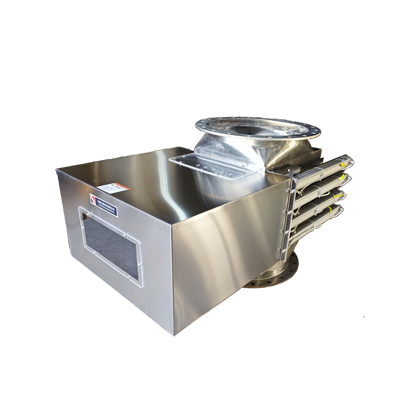
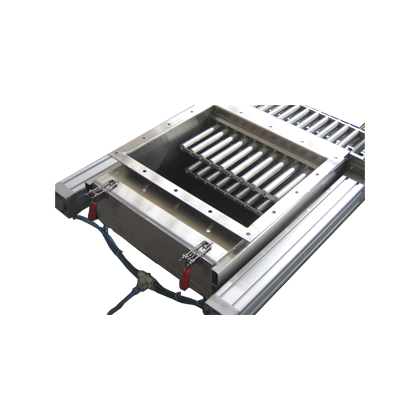
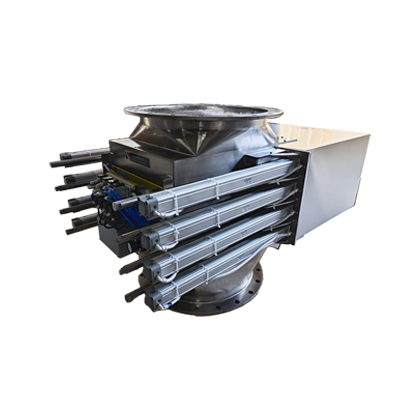
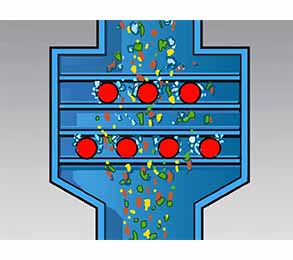
The equipment operates using a “gravity-fed + high-gradient magnetic adsorption + pneumatic automatic cleaning” process: under gravity, materials enter the device through the feed inlet and pass uniformly through a multi-layer, staggered arrangement of high-strength NdFeB magnetic rod grates. A powerful magnetic field (up to 12,000–14,000 gauss) is generated on the surface of the magnetic rods, rapidly capturing ferrous contaminants such as iron chips and iron powder. Clean material continuously flows out through the gaps between the grates, ensuring a continuous ferrous contaminant removal process. When the preset time is reached or a control signal is triggered, the PLC system actuates the cylinders to fully extract the magnetic rod drawer assembly from the material zone. Subsequently, automatic iron removal is performed—either via scraper discharge or magnetic separation—collecting the iron impurities into a collection box. Upon completion of cleaning, the magnetic rod assembly automatically resets, and the equipment immediately resumes operation, realizing a fully automated “removal–cleaning–reset” cycle.
Features and Advantages
- Fully automatic operation reduces labor costs: PLC‑controlled cleaning cycles require no manual intervention, enabling unattended operation.
- Continuous production without interruption: Supporting either rapid cleaning or a dual‑station design, the production line can remain operational during the cleaning phase.
- High‑efficiency ferrous contaminant removal: The multi‑layer magnetic rod configuration delivers a strong magnetic field, effectively capturing fine iron powder and weakly magnetic impurities.
- Automatic cleaning with zero secondary contamination: Eliminates the contamination risks associated with manual disassembly and cleaning, enhancing production cleanliness and product consistency.
- Compact structure with broad adaptability: Can be directly installed on hoppers, chutes, and vertical drop‑feed systems, suitable for various powdered material production line layouts.
- Intelligent control system: Equipped with a PLC and HMI human‑machine interface, enabling parameter setting, status monitoring, and fault alarm functions.
Optional Configurations
- Magnetic field strength options: 10,000 GS / 12,000 GS / 14,000 GS
- Cleaning method options: Pneumatic pull‑out type / scraper‑based automatic iron removal / magnetic separation iron removal
- Number of magnetic rod layers: Single‑layer / Multi‑layer (3‑layer, 5‑layer, and above)
- Material options: SS304 stainless steel / SS316L stainless steel (food‑grade and pharmaceutical‑grade)
- Control system options: Standard PLC control / HMI touch‑screen system / Explosion‑proof electrical control system
- Auxiliary configurations: Vibration‑assisted anti‑blocking device / Dust‑proof sealing structure / Quick‑release flange or clamp connection。
Applications
- Food industry: Used for online ferrous contaminant removal in food powder raw materials, ensuring metal impurity control throughout the production process and elevating food safety standards.
- Pharmaceutical industry: Employed in the purification of pharmaceutical powders to meet GMP clean production requirements and guarantee drug quality and safety.
- Fine chemical industry: Applied to ferrous contaminant removal in chemical powders, minimizing the impact of iron impurities on product quality.
- New energy industry: Used for purifying lithium battery cathode and anode material powders, reducing the influence of trace iron impurities on battery performance and safety.
- Ceramic and electronic materials industries: Utilized in the removal of ferrous contaminants from ceramic powders and high‑purity materials, preventing quality defects in finished products.
Materials Processed
- Food: Flour, starch, milk powder, powdered sugar, cereals, seasonings, feed pellets;
- Pharmaceuticals: Medicinal powders, traditional Chinese medicine powders, excipients, granules;
- New Energy: Lithium battery cathode and anode materials (lithium iron phosphate, graphite, etc.);
- Plastics: Plastic pellets, recycled materials, color masterbatches;
- Chemicals: Dyes, pigments, fertilizers, detergent powders;
- Ceramics and Electronic Materials: Alumina powder, silica micro‑powder, ceramic glazes.
SPECIFICATIONS
Specifications
| Model Model | Dimensions | 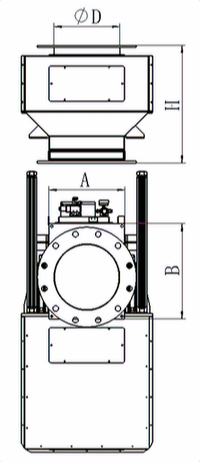 | |||||||||
| Interface Specification Interface specifications | D | A | B | H | |||||||
| (mm) | (in) | (mm) | (in) | (mm) | (in) | (mm) | (in) | (mm) | (in) | ||
| GHAEX-T2-DN150 | DN150 | 6 | 168.3 | 6 | 210 | 8 | 313 | 12 | 506 | 19 | |
| GHAEX-T2-DN200 | DN200 | 8 | 219 | 8 | 260 | 10 | 363 | 14 | 510 | 20 | |
| GHAEX-T2-DN250 | DN250 | 10 | 273 | 10 | 310 | 12 | 413 | 16 | 511 | 20 | |
| GHAEX-T2-DN300 | DN300 | 12 | 325 | 12 | 360 | 14 | 500 | 19 | |||
| GHAEX-T2-DN350 | DN350 | 14 | 355.6 | 14 | 410 | 16 | 513 | 20 | |||
DOWNLOADS
Downloads
DISCUSS YOUR APPLICATION
Unsure whether this product fits your material?
Share your material, capacity, temperature and contaminant details, and we will help you evaluate the next step.