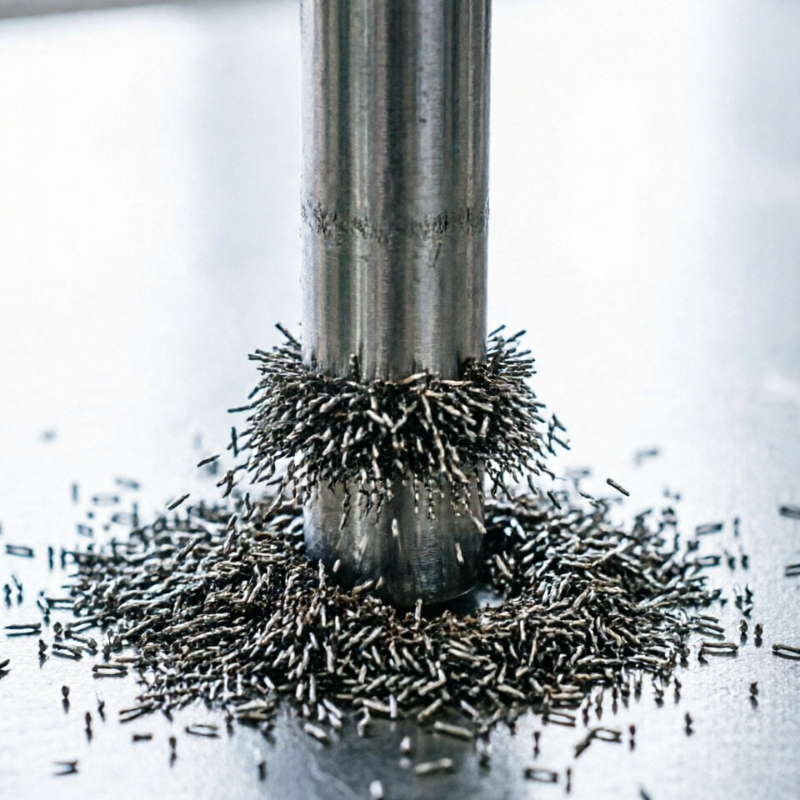
“Stainless steel” is not a single category of magnetism. Different grades, heat treatments, and cold-working conditions exhibit varying magnetic responses; therefore, to determine whether a magnetic rod can capture a particular type of stainless-steel debris, the more reliable approach is to identify the source and verify using genuine samples.
Why Some Stainless Steels Are Attracted
Ferritic and martensitic stainless steels typically display relatively strong magnetism; austenitic stainless steels are weakly magnetic in the solution-annealed state. However, localized microstructural changes resulting from cutting, stamping, drawing, grinding, or welding may impart to fine chips a magnetic response that can be captured by high-gradient magnetic fields.
12,000 gauss and 14,000 gauss do not alone define performance
The gauss value usually represents the magnetic flux density at a specific point on the surface of a magnetic rod. Capturing small or weakly magnetic particles also depends on the magnetic field gradient, pole spacing, rod spacing, material-layer thickness, and the distance between the particles and the rods. Moreover, different instruments, probe orientations, and measurement locations can lead to variations in readings.
How to Conduct Repeatable Tests
First, fix the gaussmeter probe’s orientation and measurement location, and record the peak value as well as multiple representative points along the magnetic rod’s surface. Then, mix known quantities of contaminants with specified particle sizes into a representative feed stream, and pass it through the equipment at the actual flow rate. After testing, weigh both the captured material and the residual stream, and repeat the procedure at least several times.
The More Critical Engineering Consideration
If the contaminants originate from equipment wear, the source of wear should be traced concurrently. Magnetic rods are designed to reduce the risk of ferrous foreign objects entering downstream processes, but they cannot replace comprehensive equipment-condition management, nor can they guarantee the capture of all non-magnetic stainless-steel particles or those passing at significant distances from the rods.
Information Recommended for Preparation Before Inquiries or Sample Testing
- Stainless-steel grade or debris source
- Particle size, shape, and approximate concentration
- Material condition, flow rate, and passage method
- Diameter, spacing, and cleaning cycle of existing magnetic rods
Note:This document is intended to organize common engineering considerations and does not substitute for technical confirmation tailored to specific materials, production capacity, interface requirements, safety protocols, and cleaning practices.
Structure and Principle Diagrams
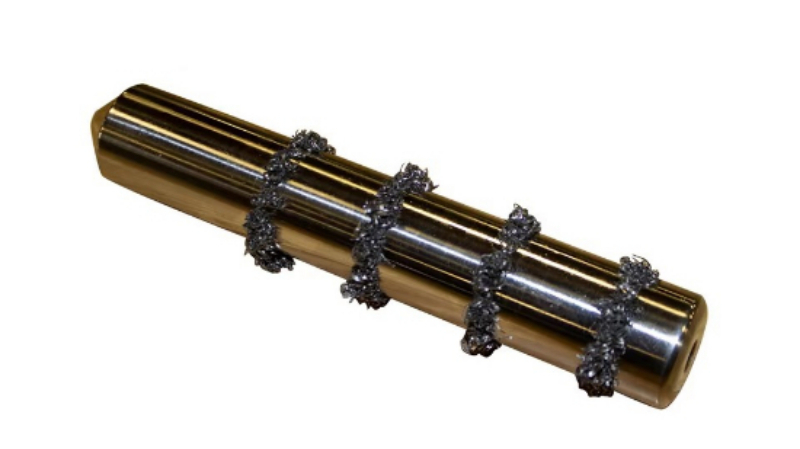
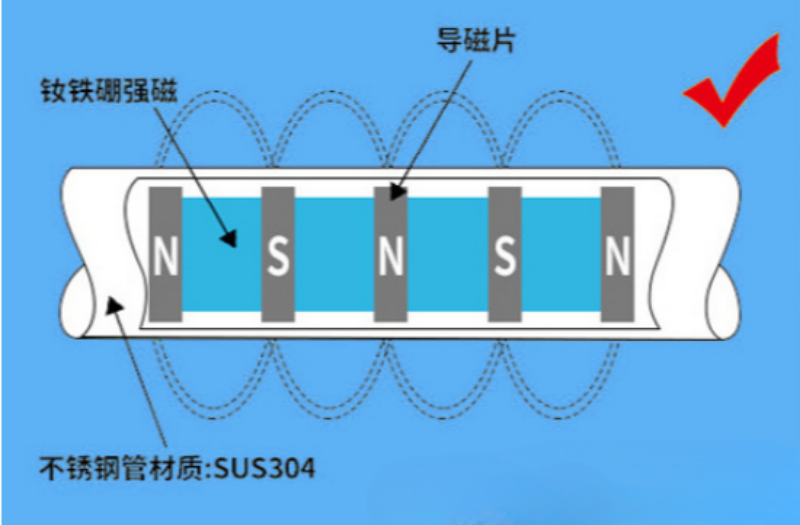
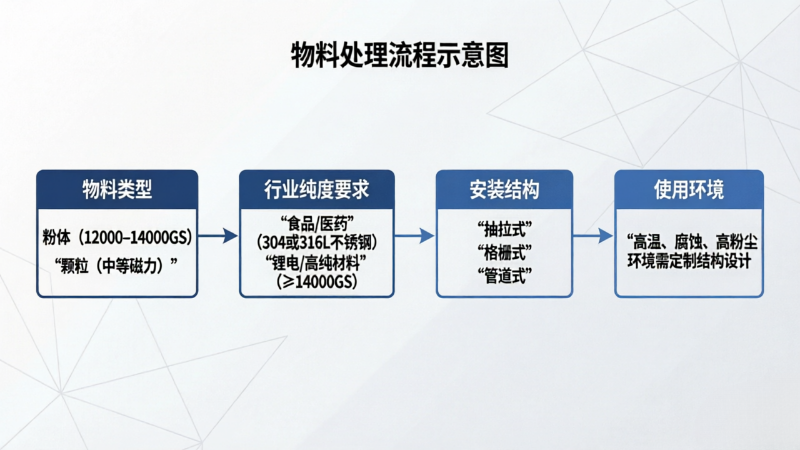
The following are the company’s accumulated data on equipment internal structures, components, and operating principles, intended to aid in understanding the technical points discussed herein. Actual structures and parameters shall be subject to project drawings, sample-testing results, and selection-confirmation outcomes.
No comments yet. You are welcome to share your thoughts.