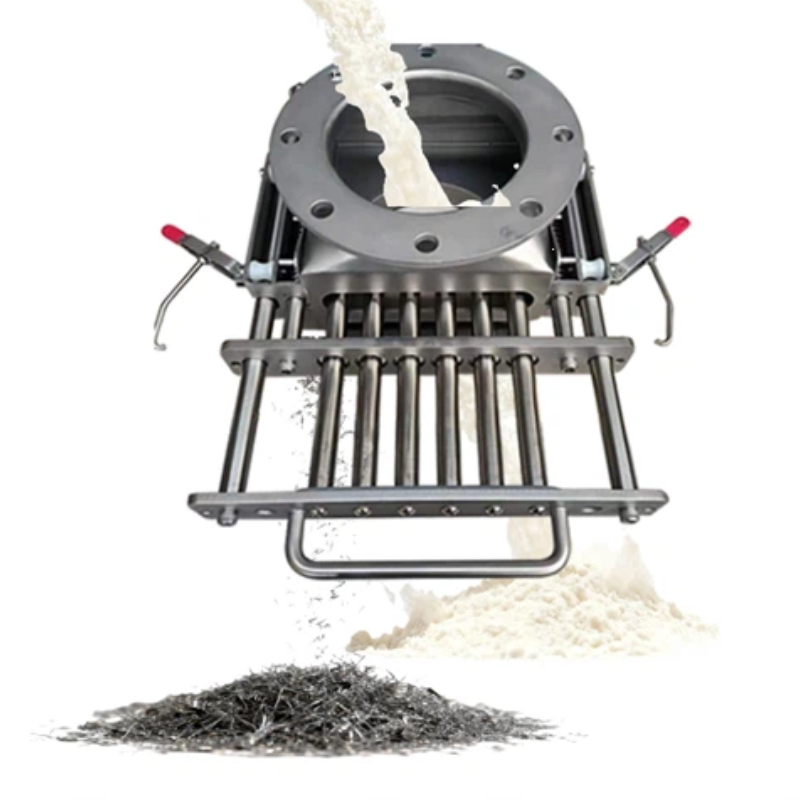
The drawer magnet arranges one or more layers of magnetic rods within a sealed housing, allowing materials to pass through the magnetic field under gravity. Its structure is easy to evaluate, but having more layers and narrower spacing is not always preferable; selection must balance contact probability, throughput capacity, and cleaning accessibility.
Number of Layers and Staggered Arrangement
Multi-layer staggered arrangements can reduce straight-through paths, bringing materials into closer proximity with the magnetic rods at multiple locations, making them suitable for applications with stricter control requirements for fine ferrous contaminants. However, increasing the number of layers also elevates the equipment height, retention volume, and flow resistance, so caution is advised when handling powders prone to caking.
Magnetic Rod Spacing
The spacing should be determined jointly by the maximum particle size, agglomeration dimensions, flow characteristics, and design throughput. Overly tight spacing can lead to material blockages, while excessively wide spacing may allow some materials to remain outside the effective magnetic field. In practice, the optimal spacing should be verified through sample material passage tests rather than being arbitrarily applied based solely on pipe diameter.
Manual, Simple Cleaning, or Automatic Cleaning
When contamination levels are low and periodic shutdowns are permissible, manual drawer mechanisms typically offer a simpler structure and easier maintenance; sleeve-style cleaning can reduce wiping effort. For continuous production, frequent cleaning needs, or situations where personnel access is restricted, pneumatic automatic cleaning may be considered, though it must incorporate position sensing, valve interlocks, and iron discharge collection.
Establishing the Cleaning Cycle
During initial commissioning, inspect and record accumulated iron deposits at relatively short intervals. The cleaning cycle should be scheduled before the magnetic rods develop a thick layer of adhered particles, while also accounting for potential sudden contamination caused by upstream maintenance or changes in raw material batches.
Information to Prepare Before Requesting a Quote or Conducting a Sample Test
- Material name, particle size, moisture content, and flow characteristics
- Normal and peak throughput rates
- Size of ferrous contaminants and their anticipated load
- Allowable downtime, cleaning method, and automation requirements
Note:This document serves to organize common engineering considerations and does not replace technical confirmation tailored to specific materials, production capacities, interface conditions, safety requirements, and cleaning protocols.
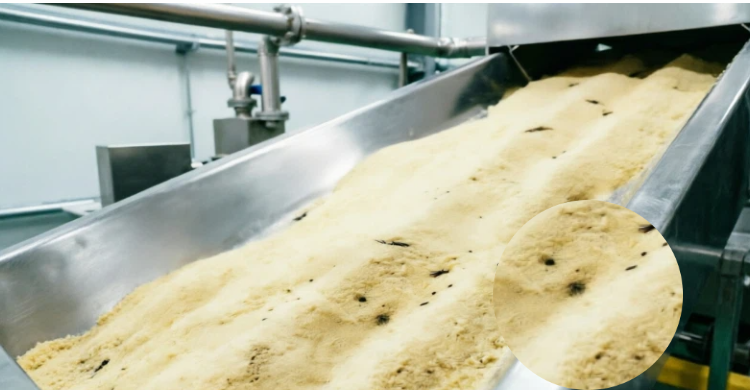
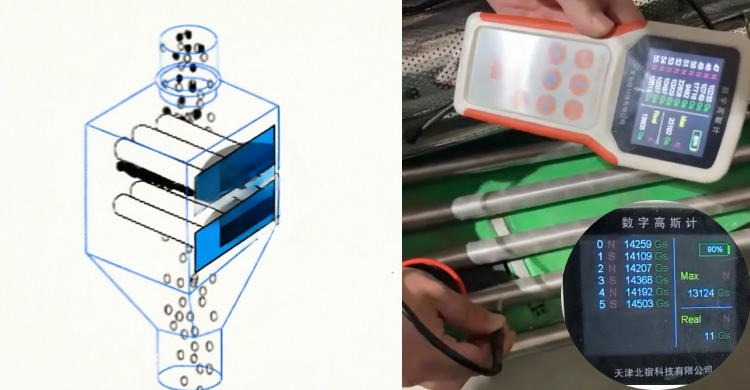
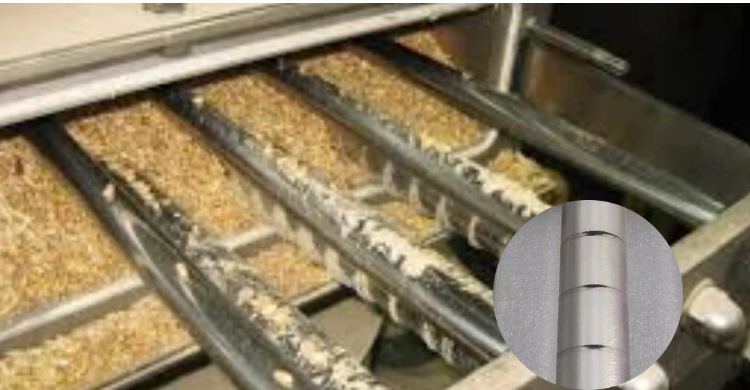
Structural and Principle Diagrams
The following materials present the company’s accumulated data on equipment internal structures, components, and operating principles, intended to aid in understanding the technical points discussed herein. Actual structures and parameters shall be subject to project drawings, sample material testing, and final selection confirmation results.
No comments yet. You are welcome to share your thoughts.