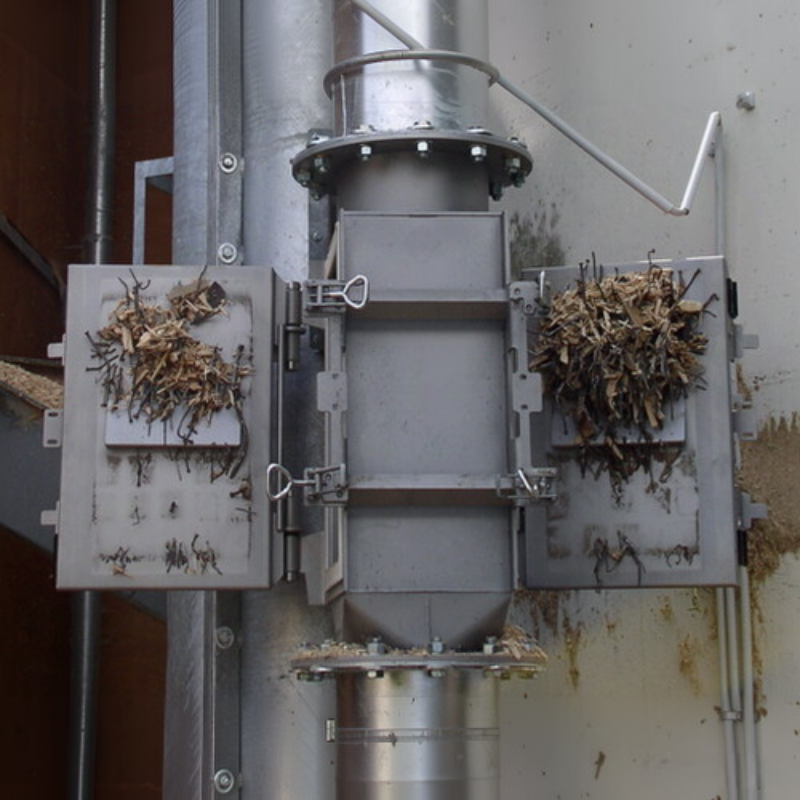
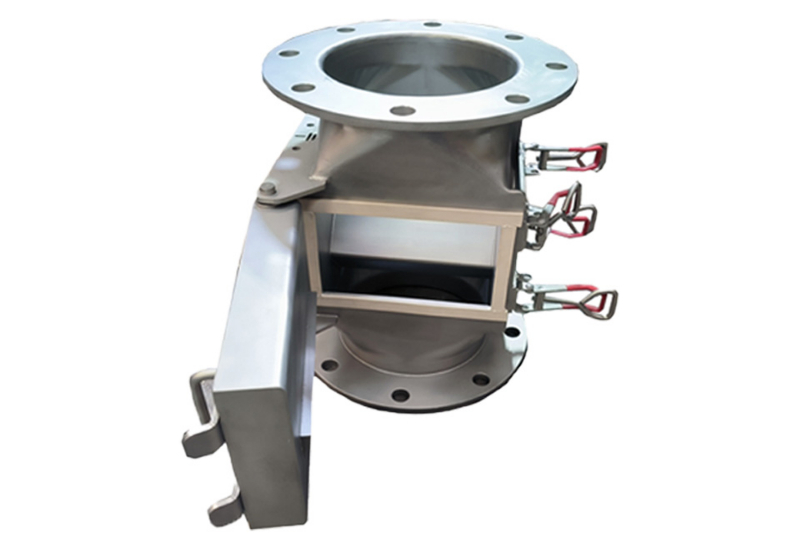
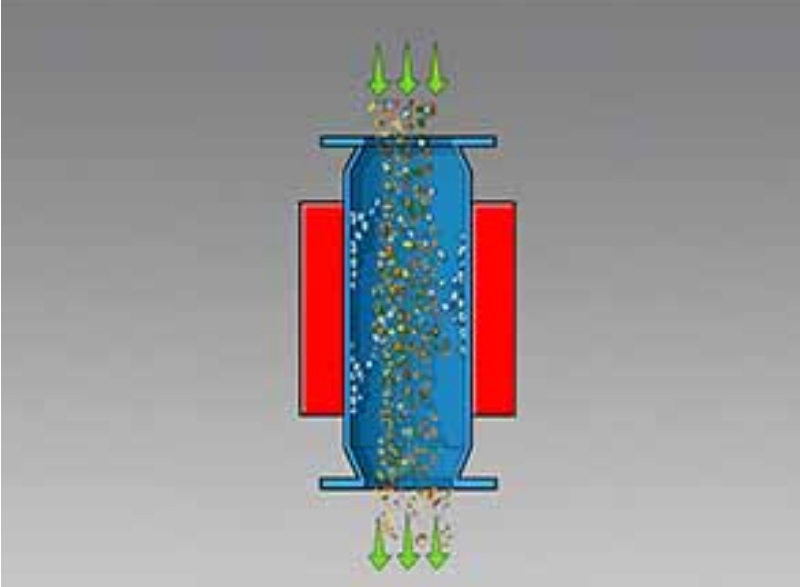
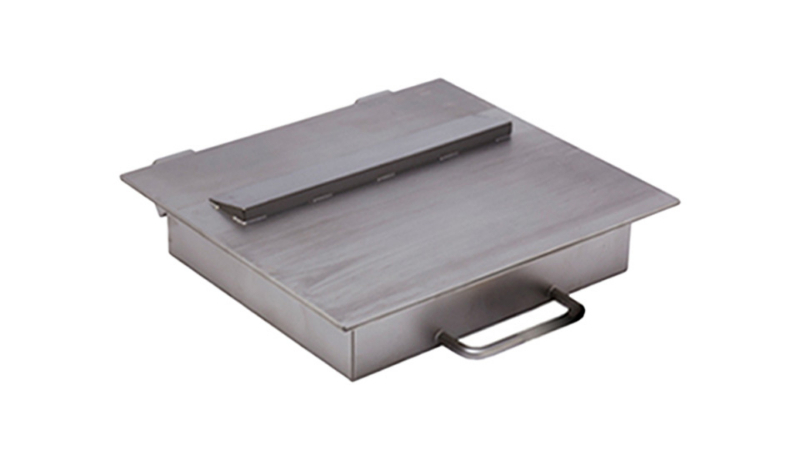
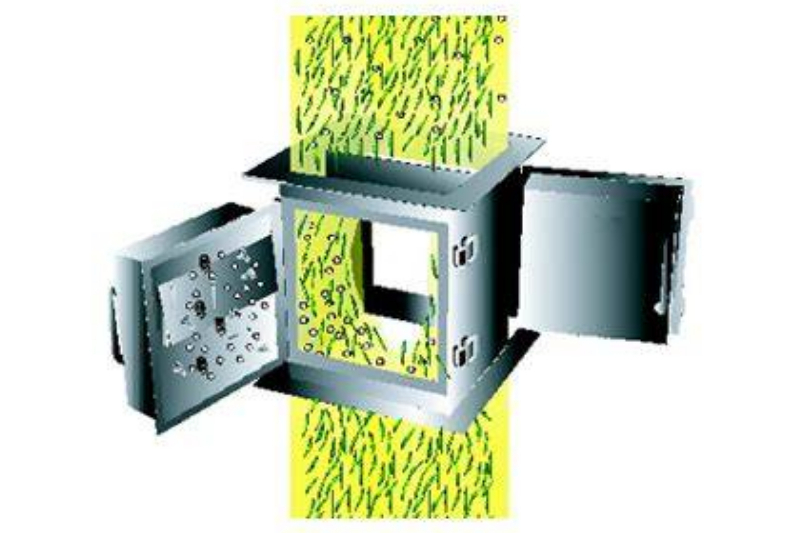
Magnetic plate-type pipeline magnetic separators mount magnetic plates on both sides of a closed discharge housing; as the material flows through or passes near the working surface, ferromagnetic contaminants are adsorbed. This type is suitable for gravity-fed discharge and certain low-pressure conveying applications, but should not be used directly in pressurized liquid lines without prior verification.
Installation Location
Select a location where the material stream is relatively dispersed and the flow rate is controllable, and avoid direct impacts onto the magnetic plates from significant drop heights. A deflector or buffer can be installed above, and sufficient discharge space should be provided below to prevent back pressure or material accumulation at the equipment outlet.
Clearance and Effective Opening
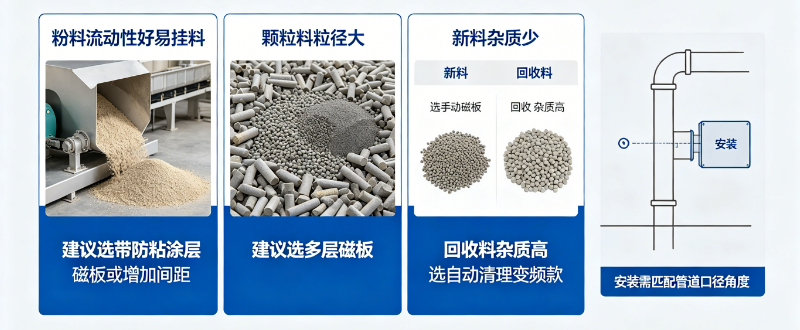
The closer the two side-mounted magnetic plates are positioned, the nearer the material comes to the magnetic field; however, an excessively narrow passage increases the risk of blockage. The maximum particle size, agglomerate dimensions, peak flow rate, and any material adhering to the inner walls of the housing must all be factored into the net opening dimension.
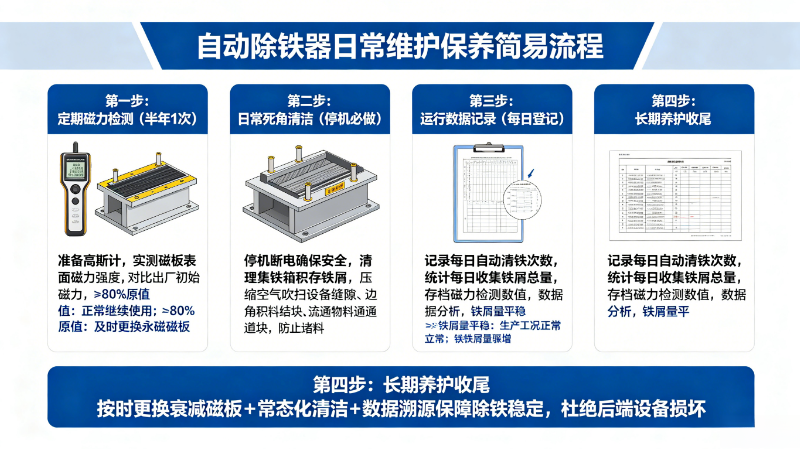
Manual Cleaning
The maintenance access door must open fully, and the direction in which the magnetic plates are withdrawn or flipped should not interfere with platforms or pipelines. During cleaning, stop the process and isolate the upstream supply; use non-magnetic tools to collect contaminants and prevent iron filings from falling back into the qualified product stream.
When to Automate
When cleaning is frequent, the equipment is located in a hard-to-reach area, or production cannot tolerate prolonged downtime, pneumatic movable magnetic plates or automatic iron-removal mechanisms may be employed. Even automated operations still require material flow shutdown or valve isolation, position feedback, and a dedicated iron-discharge channel.
Information Recommended Before Inquiries or Sample Testing
- Name of the powder or granular material, maximum particle size, and flow characteristics
- Throughput, drop height, pipe dimensions, and orientation
- Contaminant size and estimated iron accumulation
- Maintenance clearance, cleaning frequency, and automation requirements
Note:This document is intended to summarize common engineering considerations and does not replace the technical confirmation required for specific materials, throughput, interfaces, safety, and cleaning conditions.
Structural and Principle Diagrams
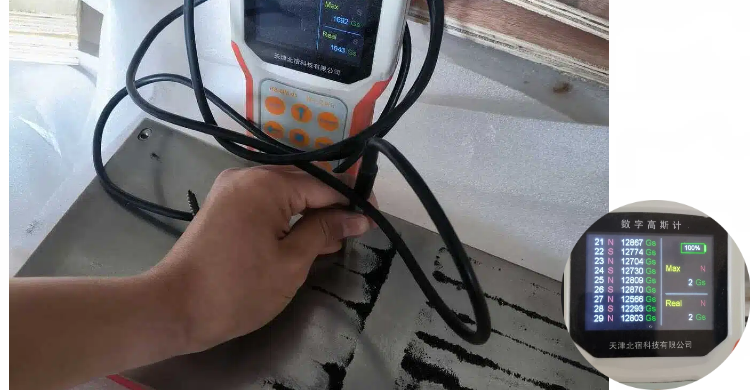
The following are the company’s accumulated data on equipment internal structures, components, and operating principles, provided to aid in understanding the technical points discussed herein. Actual structure and parameters shall be subject to project drawings, sample testing, and selection confirmation results.
No comments yet. You are welcome to share your thoughts.